Self-Paced Data Science Internship (Recorded + Practical | 1 Month)

About Course
🚀 Virtual Data Science Internship — (1 Month)
🎯 Watch this short video to understand how this internship prepares you for real-world AI careers.
• Self-paced 1-month internship structured across 3 weeks — from Python & Statistics foundations through NumPy, Pandas, and Data Visualisation, to hands-on Machine Learning with Regression, Classification, and Model Tuning
• Hands-on training using 10 practical lab sessions with 60 graded coding tasks on real industry datasets — covering the complete Data Science workflow from raw data to deployed model
• End-to-end Capstone Project applying all 10 lessons in one real-world Data Science problem — with dedicated instructor evaluation and written feedback
• Internship Completion Certificate issued within 24 hours of Capstone Project approval
• Includes Offer Letter, Letter of Recommendation, and Training Certificate
📌 Limited seats per batch. Early enrollment recommended to avoid missing the next intake.
📌 Program Details
• Duration: 1 Month (4 Weeks) — Self-Paced
• Mode: 10 Recorded Video Lessons + 10 Interactive Coding Labs (60 hands-on tasks) + 1 Capstone Project
• Weekly Structure:
- Week 1 — Python for Data Science + Statistics & Probability
- Week 2 — NumPy + Pandas + Data Visualisation + Exploratory Data Analysis
- Week 3 — ML Foundations + Regression + Classification + Model Tuning & Pipelines
- Week 4 — Capstone Project (end-to-end real dataset, instructor evaluated)
• Instructor Involvement: Capstone Project Evaluation & Certification only
• Prerequisites: Basic Python knowledge recommended — Week 1 covers Python from scratch for those who need a refresher
📅 WEEK 1 – Python & Statistics Foundation
🟢 Python for Data Science Students learn the core Python skills required for data science, including variables and data types, control flow, functions, and data structures. Hands-on coding exercises build logical thinking and scripting confidence. The focus is on writing clean, practical Python code for real data workflows.
🟢 Statistics & Probability This module covers essential statistical concepts including descriptive statistics, probability distributions, hypothesis testing, and correlation analysis. Students understand how these mathematical foundations directly support machine learning algorithms. Practical examples connect theory to real data-driven decision making.
📅 WEEK 2 – Data Handling & Visualisation
🟢 NumPy Students learn numerical computing using arrays, vectorised operations, indexing, filtering, and mathematical functions. NumPy enables fast and efficient data manipulation required for all machine learning tasks. Practical coding builds clarity in working with multi-dimensional arrays.
🟢 Pandas This module focuses on working with structured datasets using DataFrames. Students learn data loading, inspection, cleaning, filtering, sorting, grouping, and merging techniques. It fully prepares them for real-world data management and analysis.
🟢 Data Visualisation Students create meaningful visualisations using Matplotlib and Seaborn. Charts including histograms, scatter plots, bar charts, and heatmaps help identify trends and patterns in data. Visualisation skills enhance analytical thinking and communication of findings.
🟢 Exploratory Data Analysis (EDA) Students follow a structured 5-step EDA workflow — loading and auditing data, univariate analysis, bivariate analysis, and multivariate analysis — to discover patterns, relationships, and outliers. EDA generates critical insights before any machine learning model is applied. This is the most important practical skill in the real-world data science pipeline.
📅 WEEK 3 – Machine Learning
🟢 Introduction to Machine Learning Students understand the types of machine learning, the end-to-end ML workflow, train-test splitting, cross-validation, and the bias-variance tradeoff. They learn what it means to build a model that generalises to new data. This builds the conceptual foundation for all subsequent algorithm lessons.
🟢 Regression & Prediction Students implement Linear Regression, Ridge and Lasso regularisation, Polynomial Regression, and multi-feature models. They learn to build predictive models for continuous targets and evaluate them using RMSE, MAE, and R² metrics. Hands-on price prediction tasks strengthen practical understanding.
🟢 Classification Algorithms Students implement Logistic Regression, Decision Trees, and Random Forest classifiers on real datasets. They learn evaluation metrics including accuracy, precision, recall, F1, and ROC-AUC, and handle imbalanced class distributions. A churn prediction project applies all classification concepts end to end.
🟢 Model Tuning & Evaluation Students master Cross-Validation, GridSearchCV, RandomizedSearchCV, learning curves, feature importance analysis, and sklearn Pipelines. They learn to systematically improve any model and package the full preprocessing-to-prediction workflow into a single reproducible pipeline. This is the final step before real-world deployment.
📅 WEEK 4 – Capstone Project & Internship Conclusion
🟢 Capstone Project Development Students work on an end-to-end real-time capstone project applying all 10 lessons. They perform data cleaning, full EDA, feature engineering, model building, tuning, and evaluation to solve a practical data science problem. This ensures complete hands-on industry exposure.
🟢 Project Documentation Students prepare structured project documentation covering problem statement, dataset description, methodology, model results, and conclusions. The completed documentation is submitted to the Synkoc instructor along with the Jupyter Notebook for capstone evaluation.
🟢 Final Presentation & Review Students submit their capstone project and documentation to their Synkoc instructor for evaluation. The instructor reviews the full data science pipeline, EDA quality, model performance, and tuning decisions, then conducts a one-on-one evaluation session. Successful completion unlocks the Internship Completion Certificate, Training Certificate, and Letter of Recommendation — all issued within 24 hours of approval.
Course Content
📄 Internship Offer Letter
-
🚀 Generate Offer Letter
WEEK 1 – Python & Statistics Foundation
WEEK 2 – Data Handling & Visualisation
WEEK 3 – Machine Learning
WEEK 4 – Capstone Project & Internship Conclusion
🎓 Request Your Internship Completion Certificate & Letter of Recommendation
🎓 Training Completion Certificate Request
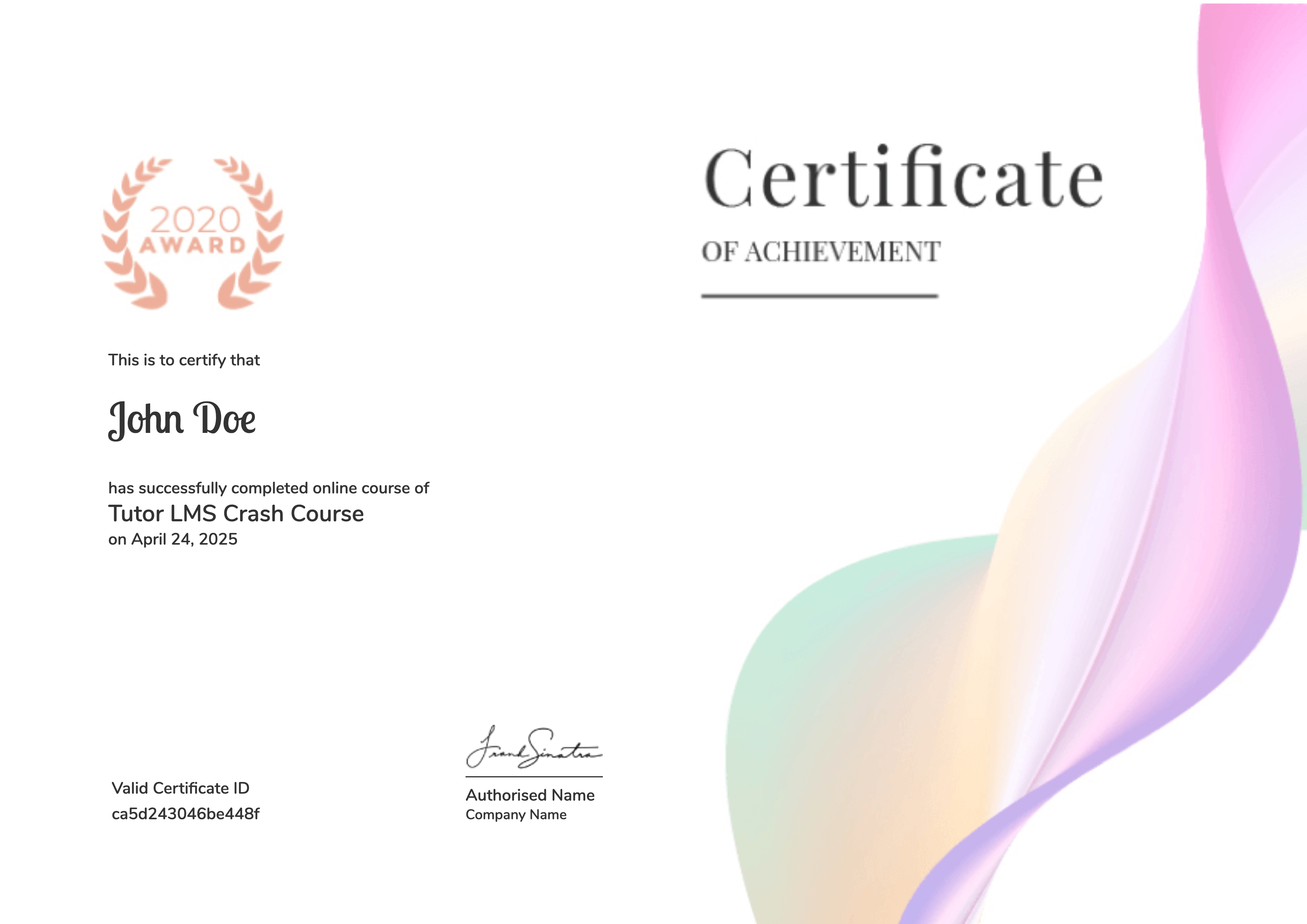
Earn a certificate
Add this certificate to your resume and LinkedIn to showcase your skills and achievements.
Student Ratings & Reviews