Self-Paced AI & Machine Learning Internship (Recorded + Practical | 6 Weeks)
About This Course
This course includes interactive video lessons with voice narration and a built-in Python code editor. Please open it on Chrome on a laptop or desktop for the full experience.
🚀 Virtual AI & Machine Learning Internship – (6 Weeks)
🎯 Watch this short video to understand how this internship prepares you for real-world AI careers.
- Self-paced 6-week internship with real-world project implementation
- Hands-on training using industry datasets and practical ML workflows
- End-to-end Capstone Project with dedicated instructor evaluation
- Internship Completion Certificate issued within 24 hours of project approval
- Includes Offer Letter, Letter of Recommendation, and Training Certificate
📌 Limited seats per batch. Early enrollment recommended to avoid missing the next intake.
📌 Program Details
- Duration: 6 Weeks — Self-Paced • Mode: Recorded Video Lessons + Interactive Coding Labs • Instructor Involvement: Capstone Project Evaluation & Certification only • Prerequisites: Basic programming knowledge (preferably Python) is recommended
📅 WEEK 1 – Python & Statistics Foundation
🟢 Python Programming
Students learn the fundamentals of Python required for AI/ML, including variables, loops, functions, and data structures. Hands-on exercises improve logical thinking and coding confidence. The focus is on building a strong programming base.
🟢 Statistics for Data Science
This module covers essential statistical concepts such as mean, variance, probability, and correlation. Students understand how mathematical concepts support machine learning algorithms. Practical examples help connect theory with data-driven decision making.
📅 WEEK 2 – Data Handling & Visualization
🟢 NumPy
Students learn numerical computing using arrays and mathematical operations. NumPy enables efficient data manipulation required for machine learning tasks. Practical coding ensures clarity in array handling.
🟢 Pandas
This module focuses on working with structured datasets using DataFrames. Students learn data cleaning, handling missing values, filtering, and grouping techniques. It prepares them for real-world data management.
🟢 Data Visualization
Students create meaningful visualizations using Matplotlib and Seaborn. Charts like histograms, bar graphs, and heatmaps help identify trends and patterns. Visualization enhances analytical thinking.
🟢 Exploratory Data Analysis (EDA)
Students analyze datasets to discover patterns, relationships, and outliers. EDA helps generate insights before applying machine learning models. This is a critical step in real-world data science workflows.
📅 WEEK 3 – Machine Learning Algorithms
🟢 Introduction to Machine Learning
Students understand supervised and unsupervised learning concepts. They learn about training and testing datasets, overfitting, and model evaluation. This builds a strong foundation for implementing algorithms.
🟢 Supervised Learning
Students implement algorithms such as Linear Regression, Logistic Regression, KNN, and Decision Trees. They learn to build predictive models using labeled datasets. Hands-on practice strengthens conceptual clarity.
🟢 Unsupervised Learning
Students explore clustering techniques like K-Means. They learn how to group data without predefined labels. This is useful for customer segmentation and pattern recognition.
🟢 Model Evaluation
Students learn to measure model performance using accuracy, precision, recall, and other metrics. They understand how to improve model reliability and efficiency. Evaluation ensures practical and effective AI solutions.
📅 WEEK 4 – Deep Learning & Neural Networks
🟢 Deep Learning & Neural Networks
Students learn how neural networks are structured and trained, starting from a single neuron through to multi-layer architectures. They build and train models using Keras and TensorFlow, covering backpropagation, activation functions, and optimisers. Hands-on labs include building a CNN on MNIST and applying transfer learning with MobileNetV2.
📅 WEEK 5 – NLP & Computer Vision
🟢 Natural Language Processing
Students build complete text preprocessing pipelines and learn TF-IDF vectorisation, word embeddings, and transformer-based models. They run BERT inference using HuggingFace Transformers for real-world sentiment classification tasks.
🟢 Computer Vision Students implement object detection using YOLOv8 and build a combined NLP and Computer Vision mini-pipeline demonstrating multimodal AI. This reflects the architecture used in modern AI products like GPT-4V and Gemini.
📅 WEEK 6 – Capstone Project & Internship Conclusion
🟢 Capstone Project Development
Students choose 2 from 10 industry-grade real-world projects and build complete end-to-end ML pipelines independently. Each project spans 8 phases — data loading, EDA, feature engineering, model training, hyperparameter tuning, error analysis, production pipeline, and business report — applying all skills learned across 5 weeks.
🟢 Project Documentation
Students prepare structured project documentation covering problem statement, dataset description, methodology, model results, and conclusions. The completed documentation is submitted to the Synkoc instructor along with the Jupyter Notebook for capstone evaluation.
🟢 Final Presentation & Review
Students submit their capstone project and documentation to their Synkoc instructor for evaluation. The instructor reviews the ML pipeline, EDA quality, and results, then conducts a one-on-one evaluation session. Successful completion unlocks the Internship Completion Certificate, Training Certificate, and Letter of Recommendation — all issued within 24 hours of approval.
Learning Objectives
Material Includes
- Recorded Video Lessons — Watch anytime, as many times as needed
- Interactive Coding Labs with built-in code editor
- Lifetime Access to all course materials
- Downloadable Python Practice Files
- Real-World Datasets for Hands-on Implementation
- Jupyter Notebook Project Files
- Machine Learning Algorithm Code Examples
- Deep Learning Model Code Examples — Keras, TensorFlow, CNNs, Transfer Learning
- NLP & Computer Vision Code Examples — TF-IDF, BERT, YOLOv8, Multimodal Pipeline
- Structured Assignments and Practice Exercises
- Capstone Project Guidelines & Implementation Roadmap
- Professional Project Documentation Template
- Interview Preparation Materials
- Resume & LinkedIn Profile Optimisation Guidance
- Internship Offer Letter
- Dedicated Instructor Evaluation for Capstone Project
- Letter of Recommendation (Performance-Based)
- Internship Completion Certificate
- Training Certificate
- Capstone Project Completion Certificate
- Career Guidance & Placement Assistance
- Community Support & Peer Learning Network Access
Requirements
- Basic programming knowledge (preferably Python) is recommended
- A laptop or desktop with minimum 4GB RAM (8GB recommended for smooth performance)
- Stable internet connection to access recorded lessons and labs
- Installation of required software (Python & Jupyter Notebook — setup guidance provided)
- Best experienced on Chrome on a laptop or desktop for interactive video lessons and built-in code editor
- Complete all 6 weeks of lessons and coding labs at your own pace
- Submission of the Capstone Project for instructor evaluation before certification
- Students must adhere to Synkoc's processes, policies, and code of conduct
- Internship course fee is subject to change as per organisational policies
- Refund requests must be raised within 30 days from the date of payment
- Certificates will be issued only upon successful completion of all course requirements
- Students are expected to maintain professional and ethical behaviour throughout the internship
Target Audience
- Engineering students interested in Machine Learning and Artificial Intelligence
- Computer Science and IT students seeking practical ML implementation skills
- Degree students aspiring to build a career in Data Science and Machine Learning
- Beginners who want a structured entry into Machine Learning
- Students preparing for internships and campus placements
- Final-year students looking for hands-on Capstone Project experience
- Working professionals planning to transition into Machine Learning or Data roles
- Individuals with basic programming knowledge interested in AI/ML
- AICTE-affiliated engineering and technology students requiring recognised internship credits.
Curriculum
💼📄 Internship Offer Letter
🚀 Generate Offer Letter
📥 Course Materials
WEEK 1 – Python & Statistics Foundation
WEEK 2 – Data Tools & EDA
WEEK 3 – Machine Learning
WEEK 4 – Deep Learning
WEEK 5 – NLP & Computer Vision
WEEK 6 – Capstone Project & Internship Conclusion
📈 CAREER GUIDANCE & PLACEMENT ASSISTANCE
🤝 COMMUNITY SUPPORT & PEER NETWORK ← NEW SECTION
🎓 Request Your Internship Completion Certificate & Letter of Recommendation
🎓 Training Completion Certificate Request
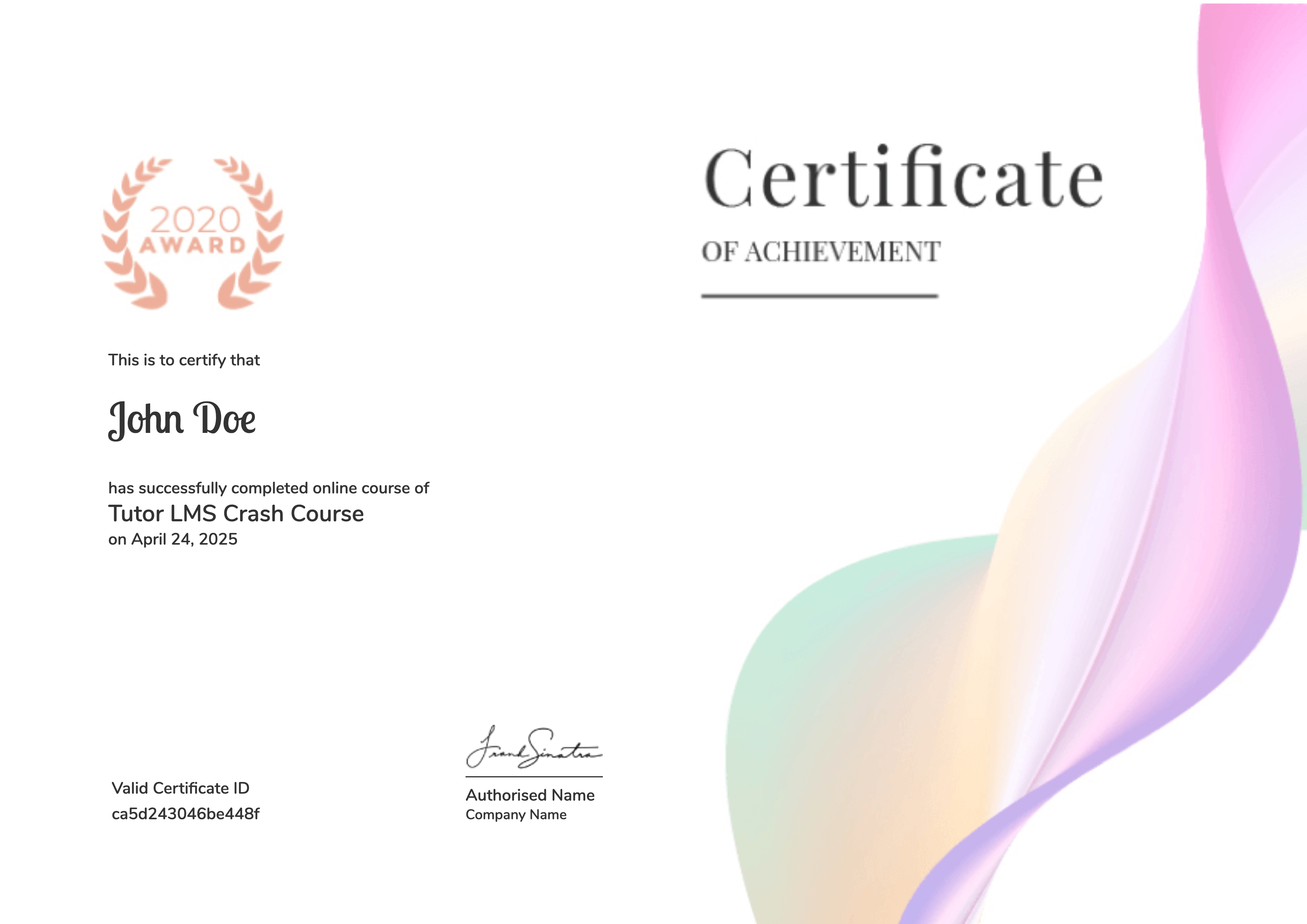
Earn a certificate
Add this certificate to your resume to demonstrate your skills & increase your chances of getting noticed.



Material Includes
- Recorded Video Lessons — Watch anytime, as many times as needed
- Interactive Coding Labs with built-in code editor
- Lifetime Access to all course materials
- Downloadable Python Practice Files
- Real-World Datasets for Hands-on Implementation
- Jupyter Notebook Project Files
- Machine Learning Algorithm Code Examples
- Deep Learning Model Code Examples — Keras, TensorFlow, CNNs, Transfer Learning
- NLP & Computer Vision Code Examples — TF-IDF, BERT, YOLOv8, Multimodal Pipeline
- Structured Assignments and Practice Exercises
- Capstone Project Guidelines & Implementation Roadmap
- Professional Project Documentation Template
- Interview Preparation Materials
- Resume & LinkedIn Profile Optimisation Guidance
- Internship Offer Letter
- Dedicated Instructor Evaluation for Capstone Project
- Letter of Recommendation (Performance-Based)
- Internship Completion Certificate
- Training Certificate
- Capstone Project Completion Certificate
- Career Guidance & Placement Assistance
- Community Support & Peer Learning Network Access